Warm Heart Font Review: A Handwritten Typeface for Branding
I was staring at a blank brand board for a local artisanal bakery last Tuesday, trying to capture that specific feeling of warmth you get when you walk in and smell fresh cinnamon rolls. The client wanted something approachable, human, and distinctly non-corporate. I scrolled past dozens of rigid sans serif font options and overly ornate scripts before landing on Warm Heart. It stopped me in my tracks. As a designer who has tested countless typefaces, I know the difference between a font that looks good in a specimen sheet and one that actually works in the wild. After putting Warm Heart through its paces on logo drafts, packaging mockups, and social media layouts, I can confidently say it is a lovely handwritten font that deserves a spot in your creative toolkit.
The Personality of a True Script Handwritten Typeface
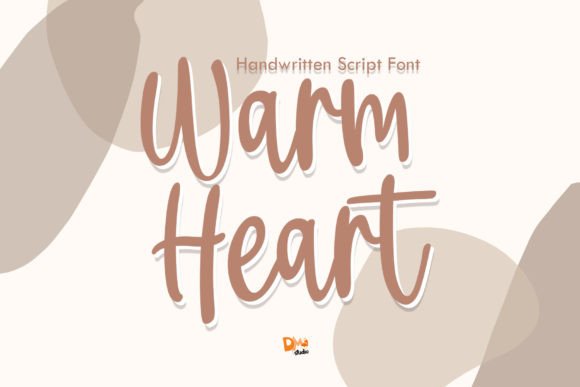
Warm Heart falls squarely into the Script Handwritten category, but it avoids the common pitfall of looking too messy or illegible. Its visual characteristics strike a delicate balance between casual spontaneity and structured elegance. The strokes feel organic, mimicking the natural pressure variations of a real brush or marker, which gives it an immediate sense of authenticity. This is crucial for modern branding, where consumers are increasingly drawn to brands that feel "real" rather than manufactured.
The mood of this typeface is undeniably friendly. It exudes a sense of care and personal touch, making it an excellent choice for businesses that rely on emotional connection. Whether you are designing for a wedding planner, a boutique skincare line, or a cozy café, the font communicates intimacy. It does not shout; it invites. In a world saturated with cold, geometric modern typography, Warm Heart offers a refreshing breath of air. It is a premium font in the sense that it carries itself with confidence, requiring little embellishment to stand out.
Putting Warm Heart to Work in Real Brand Identity Projects
Testing a font requires more than just typing out the alphabet. I needed to see how Warm Heart performed across various design assets. First, I applied it to a logo concept. The connectivity between letters is smooth, allowing for a cohesive wordmark that feels unified rather than disjointed. For the bakery project, I used it as the primary logotype. On a shop sign mockup, it remained legible from a distance, which is often a challenge with handwritten font styles. The thick strokes hold up well against light backgrounds, ensuring that the brand name is the hero.
Moving to packaging design, I placed the font on a kraft paper label for a line of homemade jams. Here, the font’s charm really shined. It complemented the rustic texture of the paper, enhancing the artisanal vibe. However, I learned quickly that Warm Heart is best used as a display font or headline font. When I tried to shrink it down for ingredient lists, the details blurred. This is a critical observation for any designer: this font is not for body text. It thrives in large sizes where its quirks and curves can be appreciated. It is ideal for short phrases, quotes, and titles, but it should never be forced into long paragraphs.
Versatility Across Digital and Print Media
Beyond physical products, I tested Warm Heart in digital environments. For web design, I used it in the hero section of a landing page. Paired with a clean, neutral sans serif for the supporting text, it created a strong visual hierarchy. The contrast between the organic script and the structured sans serif guided the user’s eye naturally. In social media graphics, the font performed exceptionally well. Instagram posts featuring inspirational quotes or product announcements gained a personal touch that stock fonts simply cannot replicate. It makes content feel curated and thoughtful.
I also experimented with editorial design elements, such as pull quotes in a digital magazine layout. The font added a layer of sophistication without feeling stiff. For business cards and greeting cards, it served as a perfect accent. Writing a name or a short thank-you note in Warm Heart adds a layer of professionalism that feels personal rather than generic. It is a versatile creative font that adapts well to different mediums, provided you respect its limitations regarding size and spacing.
Strategic Font Pairing and Design Considerations
One of the most important aspects of using a distinctive script font like Warm Heart is knowing what to pair it with. Because it has so much personality, it needs a quiet partner. I found that pairing it with a geometric sans serif font works best. The simplicity of the sans serif allows the script to take center stage without creating visual clutter. Alternatively, a classic serif font can add a touch of traditional elegance if you are aiming for a more vintage or literary aesthetic. Avoid pairing it with other decorative or handwritten fonts, as this will compete for attention and reduce readability.
When integrating Warm Heart into a brand identity, consistency is key. Use it sparingly. Reserve it for logos, headers, and key messaging. Overusing it can dilute its impact and make the design feel chaotic. Always check the kerning and leading, as handwritten fonts often require manual adjustment to ensure optimal spacing. While many Fonts come with automatic ligatures, taking the time to tweak these connections can elevate the final look from good to great.
Limitations and Licensing Best Practices
It is important to acknowledge where Warm Heart is not suitable. Do not use it for legal documents, technical manuals, or any context requiring high-density information. Its decorative nature makes it poor for small print sizes. If you are designing for a corporate law firm or a financial institution, this font likely lacks the authority and formality required. It is a tool for connection, not for conveying strict data.
Before using Warm Heart in any client work, always review the commercial font licensing. Whether you are creating logo design projects, packaging design for retail, or digital products for online sale, understanding the license terms is non-negotiable. Ensure that the license covers your specific use case, such as webfont usage for websites or embedding in apps. Respecting intellectual property protects both you and your clients. Once licensed, however, Warm Heart becomes a powerful asset. It is a lovely handwritten font that will make a wonderful asset to your collection. Add it to your logos, quotes, T-shirts, greeting cards, business cards, and many more, and make them outstanding. By testing it thoroughly and pairing it wisely, you can leverage its warmth to create memorable and engaging brand experiences.